3509 SE Willoughby Blvd, Stuart, FL 34994

Most children can have a positive first dental visit when parents prepare them properly beforehand. The key is to build familiarity, create positive expectations, and help children understand that dental care is a normal part of staying healthy.
A child’s first experience at a dental office often shapes how they feel about dental care for years to come. When children feel safe and supported during their first appointment, they are more likely to develop healthy oral habits and feel comfortable returning for routine care.
At Brent Maxson DMD, we regularly help parents prepare their children for successful first visits. Drawing from years of clinical experience caring for young patients, Dr. Brent C. Maxson believes that preparation at home often determines how comfortable children feel during their appointment. If your child is approaching their first dental visit, visit our dental office to learn how we help create positive experiences from the very beginning.
When Should a Child Have Their First Dental Visit?
Children should visit a dentist by their first birthday or within six months after their first tooth appears. Early visits allow dental professionals to monitor development and help parents prevent common oral health problems.
Many parents assume dental visits can wait until permanent teeth arrive. However, baby teeth play an important role in chewing, speech development, facial growth, and guiding permanent teeth into their proper positions.
Early appointments with a reliable pediatric dentist in Stuart allow parents to receive guidance regarding:
- Proper brushing techniques
- Healthy feeding habits
- Fluoride recommendations
- Thumb-sucking concerns
- Teething management
- Cavity prevention strategies
Starting early helps children become familiar with dental care before they ever experience a dental problem.
Why Are Children Nervous About Their First Dental Visit?
Most children are not afraid of dentistry itself. They are usually reacting to unfamiliar people, sounds, and surroundings.
Young children thrive on routine and predictability. When they enter a new environment, uncertainty can naturally create anxiety.
Common reasons children feel nervous include:
- They do not know what will happen
- They hear adults discussing dental procedures
- They are sensitive to new experiences
- They are concerned about possibly being separated from their parents.
- They notice unfamiliar sights and sounds
Understanding these concerns helps parents respond in ways that build confidence rather than fear.
How Can Parents Talk Positively About the Dentist?
Children often borrow emotional cues from their parents. When parents present dental visits as a normal and positive experience, children are more likely to feel comfortable.
Instead of focusing on what will not happen, focus on what will happen.
Helpful phrases include:
- “The dentist will count your teeth.”
- “They will help keep your smile healthy.”
- “You’ll meet friendly people who care about your teeth.”
Avoid saying:
- “Don’t be scared.”
- “It won’t hurt.”
- “There’s nothing to worry about.”
Although well-intended, these statements may unintentionally suggest that something scary could happen.
What Can Parents Do Before the Appointment?
Preparing several days before the visit can significantly reduce anxiety and improve cooperation.
Read Books About Visiting the Dentist
Children often process new experiences through stories. Reading age-appropriate books about dental visits introduces them to common sights, sounds, and routines in a comfortable setting.
Books help transform an unknown experience into something familiar.
Play Dentist at Home
Pretend play helps children gain confidence.
Use a toothbrush to count teeth, look at stuffed animals, and practice opening your mouth wide. This simple activity helps children feel more comfortable when similar actions occur during their appointment.
Schedule at the Right Time
Choose an appointment when your child is usually rested and alert.
Many younger children do best during morning appointments because they have more energy and patience earlier in the day.
Bring a Comfort Item
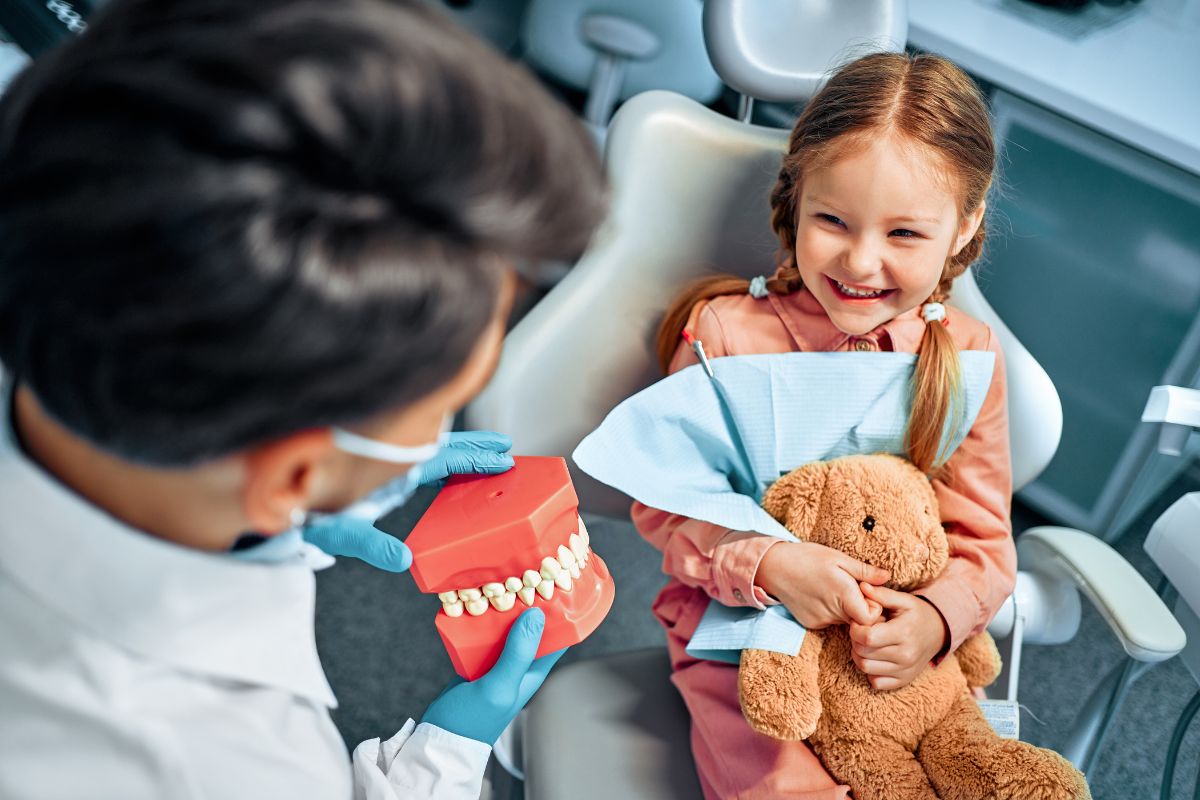
A favorite stuffed animal, blanket, or toy can provide reassurance.
Familiar objects often help children feel secure when entering a new environment.
What Should Parents Avoid Before the First Dental Visit?
Certain habits can unintentionally increase anxiety.
Small changes in communication can make a significant difference in how children perceive the experience.
Avoid:
- Sharing negative dental experiences
- Using the dentist as a punishment
- Offering excessive bribes
- Discussing needles or pain unnecessarily
- Waiting until a dental emergency occurs
The goal is to present dental visits as routine healthcare rather than something unusual or frightening.
What Happens During a Child’s First Dental Appointment?
Friendly Introduction and Comfort Building
The appointment typically begins with a warm introduction to the dental team and office environment. This helps children feel more relaxed, build trust with the staff, and become familiar with the surroundings before any examination or dental procedures take place.
Gentle Oral Examination
The dentist will carefully examine your child’s teeth, gums, and overall oral development. This evaluation helps identify any early concerns while ensuring that the child’s dental growth is progressing normally and that preventive care recommendations can be provided.
Tooth Counting and Familiarization
Many first visits include counting teeth and showing children simple dental tools in a non-threatening way. This playful approach helps young patients understand what happens during dental appointments and reduces anxiety about future visits.
Parent Education and Discussion
The dentist will discuss your child’s oral health, answer questions, and provide guidance on brushing, nutrition, fluoride use, and cavity prevention. Parents receive personalized recommendations that support healthy habits and long-term dental wellness.
Preventive Care Recommendations
Based on the examination, the dental team may suggest preventive measures to protect your child’s smile. These recommendations often focus on maintaining healthy teeth, preventing cavities, and establishing a routine that supports lifelong oral health.
A child’s first dental visit focuses on comfort, education, and relationship-building. Most appointments are designed to help children become familiar with the environment while allowing the dental team to evaluate oral health.
How Does Local Family Life Influence Dental Habits?
Healthy dental habits often develop through consistent routines. Families throughout the Treasure Coast frequently balance school schedules, sports activities, outdoor recreation, and family outings.
Whether children are spending weekends near the waterfront, attending local community events, or enjoying family dinners at favorite restaurants, oral health routines should remain consistent. Regular brushing, healthy snacks, and preventive dental visits work best when they become a natural part of everyday life.
This consistency helps children view dental care as normal rather than something reserved for emergencies.
What Advice Does Dr. Maxson Give Parents?
Parents often focus on preparing children for treatment when they should focus on preparing them for the experience.
The first appointment is usually about building familiarity and trust rather than performing extensive dental work. Children who feel comfortable during their first visit are often more cooperative during future appointments.
As a trusted pediatric dentist in Stuart may explain, children respond best when adults present dental visits as positive learning experiences rather than events that require special concern.
Simple preparation at home often creates the biggest difference.
How Can Parents Know Their Child Is Ready?
Most children are ready for a successful first visit when they can participate in basic daily routines and follow simple instructions.
Signs your child may be ready include:
- Allowing parents to brush their teeth
- Following simple directions
- Sitting comfortably with a parent
- Showing curiosity about healthcare visits
- Opening their mouth when asked
Even shy or cautious children can have excellent first appointments when properly prepared.
Why Does a Positive First Visit Matter So Much?
Early dental experiences influence future attitudes toward oral healthcare. Children who develop confidence during early appointments often maintain regular dental visits and healthier habits as they grow older.
When families establish care with a pediatric dentist in Stuart, children gain ongoing support through every stage of development. This relationship helps identify concerns early while creating familiarity that reduces anxiety over time.
A positive first visit is not simply about one appointment. It is about establishing a foundation for lifelong oral health.
Give Your Child a Comfortable Start to Lifelong Dental Health
Your child’s first dental visit is an important milestone. With the right preparation, it can become a positive experience that encourages healthy habits and confidence for years to come.
At Brent Maxson DMD, we focus on helping children feel comfortable while providing parents with trusted guidance for every stage of oral development. If your child is preparing for their first appointment, visit our dental office and book an appointment for a personalized dental evaluation. Our team will help you understand your child’s unique needs and create a positive dental experience from the very beginning.
FAQs
1. How do I know if my child is ready for their first dental visit?
Most children are ready once their first tooth appears. Early visits focus on prevention, education, and monitoring development rather than treatment.
2. What if my child cries during the appointment?
Crying is common during first visits. Dental teams who work with children understand these reactions and use gentle approaches to help them feel comfortable.
3. Should I tell my child that the visit will not hurt?
It is better to describe what will happen rather than what will not happen. Positive and simple explanations often reduce anxiety more effectively.
4. Can I stay with my child during the dental exam?
Yes. Parents are often encouraged to remain present during early visits. Your presence can provide reassurance and help your child feel secure.
5. What should my child eat before the appointment?
A light, healthy meal before the visit can help your child feel comfortable. Avoid excessive sugar and ensure they are well hydrated.
6. Why are baby teeth important if they eventually fall out?
Baby teeth support speech development, chewing, and proper jaw growth. They also help guide permanent teeth into their correct positions.
7. How often should children visit the dentist after their first appointment?
Most children benefit from preventive dental visits every six months. Your dental provider may recommend a different schedule based on individual needs.
By Digitalteam
May 29, 2026
Blog Posts
Dental Implants vs. Dentures in Stuart: Which Is Better for Missing Teeth?
How Long Does Invisalign Take in Stuart? Factors That Affect Treatment Time
How Long Do Dental Crowns Last? 7 Factors That Matter
The Real Lifespan of Cosmetic Dentistry: A Comprehensive Lifespan Guide
Veneers vs. Dental Crowns in Stuart: Which Cosmetic Restoration Is Right for You?
Are Dental Crowns Right for You? Key Candidacy Signs
