3509 SE Willoughby Blvd, Stuart, FL 34994

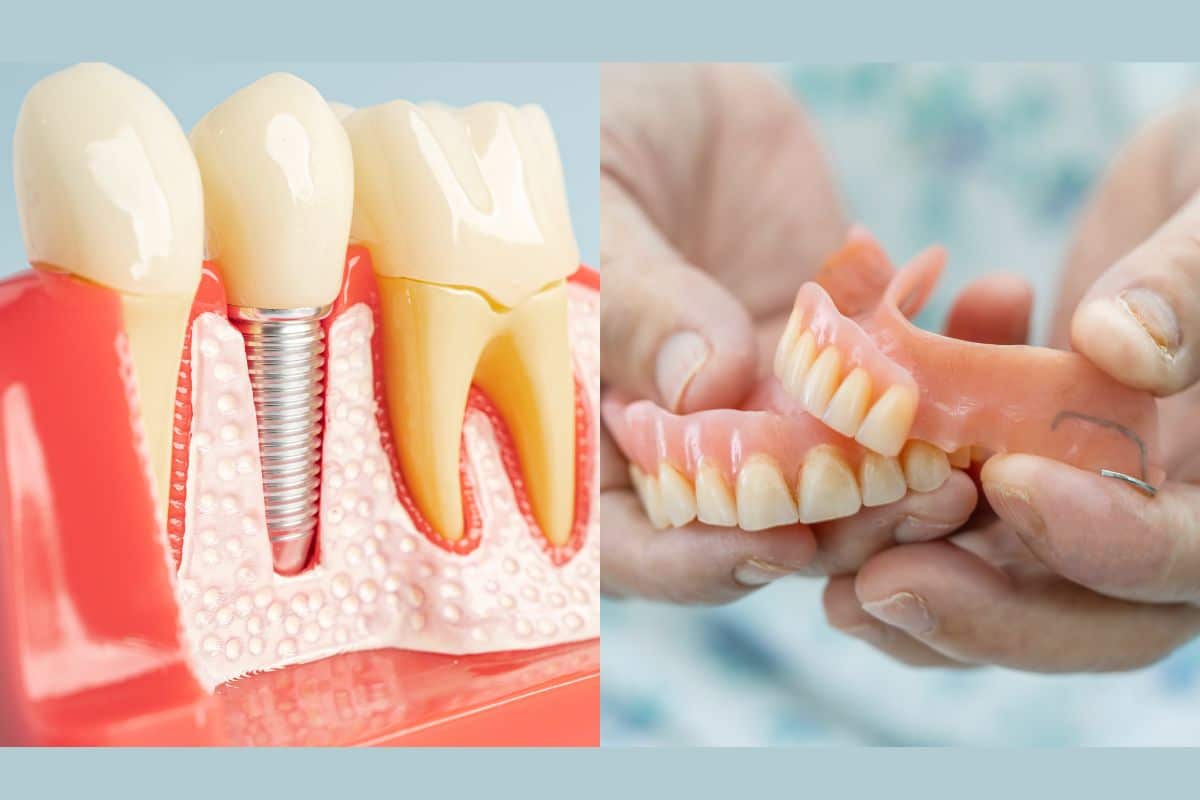
If you are missing one or more teeth, both dental implants and dentures can restore your smile and help you chew and speak more comfortably, but they work in very different ways. Dental implants are anchored in the jawbone and can support a crown, bridge, or implant-supported denture, while traditional dentures are removable prosthetic teeth that rest on the gums or attach to remaining teeth.
So, which option is better?
There is no single answer for everyone. The right choice depends on how many teeth you are missing, your gum and bone health, your overall oral health, your treatment goals, your budget, and whether you prefer a removable or more stable tooth replacement.
If you are considering [dental implants Stuart], a dental examination can help you compare implants, dentures, bridges, and implant-supported options based on your specific needs.
Dental Implants vs. Dentures: Quick Comparison
| Factor | Dental Implants | Traditional Dentures |
|---|---|---|
| Support | Anchored in the jawbone | Rest on gums or attach to remaining teeth |
| Removable | Usually fixed, depending on restoration | Yes |
| Single missing tooth | Can support an individual crown | Usually not the most direct option |
| Multiple missing teeth | Can support bridges or implant dentures | Partial or complete dentures available |
| Stability | Designed for stable support | May move, especially if fit changes |
| Jawbone | Implant placement requires adequate bone and healthy tissues | Does not require implant placement |
| Treatment process | Usually involves surgery and healing | Usually does not require implant surgery |
| Maintenance | Requires daily oral hygiene and professional care | Requires daily denture cleaning and routine dental visits |
| Cost | Generally higher initial treatment cost | Often lower initial cost |
| Best suited to | Patients seeking implant-supported tooth replacement who meet candidacy requirements | Patients seeking removable tooth replacement |
This comparison is general. Your dentist needs to evaluate your mouth before determining which treatment options are appropriate.
What Are Dental Implants?
A dental implant is an artificial tooth root that is placed into the jawbone. Once the implant has healed and integrated with the surrounding bone, it can support a replacement tooth such as a crown. Implants can also support bridges or dentures when several or all teeth are missing.
A typical single-tooth implant restoration includes:
- Dental implant: the artificial tooth root.
- Abutment: the connector between the implant and restoration.
- Dental crown: the visible replacement tooth.
For multiple missing teeth, implants may support an implant bridge or an implant-retained denture.
Potential Benefits of Dental Implants
Dental implants can offer several advantages:
- Stable support for replacement teeth
- Replacement of individual missing teeth without using a removable denture
- Support for bridges and implant-supported dentures
- A natural-looking replacement when properly planned
- Restoration of chewing function
- Integration with the jawbone
Because implants are placed in the jawbone, they require adequate bone and healthy oral tissues. Some patients may need additional treatment, such as bone grafting, before implant placement.
The ADA emphasizes that patients should receive a comprehensive examination before deciding on implants or other tooth-replacement options.
What Are Dentures?
Dentures are removable dental prostheses designed to replace missing teeth.
There are two common types:
Partial Dentures
A partial denture replaces several missing teeth when some natural teeth remain. Depending on the design, it may use the remaining teeth for support and stability.
Complete Dentures
A complete denture replaces all the teeth in an upper or lower dental arch.
Dentures can restore the appearance of your smile and help improve chewing and speaking. However, they require an adjustment period, and their fit can change as the tissues supporting them change over time.
Dental Implants vs. Dentures: 7 Factors to Consider
1. How Many Teeth Are You Missing?
The number and location of your missing teeth can significantly affect your treatment options.
If you are missing one tooth, an implant-supported crown may provide a way to replace that tooth without placing a removable appliance.
If you are missing several teeth, options may include:
- Dental implants
- Implant-supported bridges
- Partial dentures
- Implant-supported partial dentures
If you are missing all teeth in an arch, possible options include complete dentures, implant-retained overdentures, or fixed implant-supported restorations.
Your dentist can determine which choices fit your pattern of tooth loss.
2. How Important Is Stability to You?
Traditional dentures are removable. Although a properly fitted denture can provide useful function, it can move during eating or speaking, particularly if the fit changes.
Implants are anchored into the jawbone, which provides a different type of support.
For patients who have difficulty keeping a lower denture stable, implant-retained dentures may be another option. These dentures attach to dental implants and remain removable while gaining additional support from the implants. The ADA recognizes implant-retained dentures as one type of denture option.
3. Do You Have Enough Jawbone for Implants?
Dental implants require suitable bone support.
After tooth loss, the jawbone can change over time. The amount of available bone is one of the factors your dentist or implant provider will evaluate before recommending implant treatment.
A dental examination may include dental X-rays or 3D imaging to evaluate the jawbone, neighboring structures, and implant placement sites.
If there is not enough bone in the planned implant area, additional procedures may sometimes be considered.
That does not automatically mean implants are impossible. It means your dentist needs to determine whether additional treatment can make implant placement appropriate.
4. How Do You Feel About Surgery?
Dental implants involve a surgical procedure to place the implant into the jawbone, followed by a healing period before the final restoration is completed.
Dentures do not require implant placement surgery.
For someone who wants to avoid oral surgery or who is not an appropriate implant candidate, dentures may be considered as an alternative.
The decision should be based on your dental health, medical history, treatment goals, and discussion with your dental provider.
5. What Is Your Budget?
Cost is an important part of the decision.
Traditional dentures generally have a lower initial treatment cost than dental implants. However, the total cost of either option depends on several factors, including the number of teeth being replaced, the type of restoration, preparatory procedures, materials, and follow-up care.
Dental insurance benefits also vary widely, and coverage limitations can apply to tooth replacement procedures.
Instead of comparing only the initial price, ask your dental team about the complete treatment plan and expected maintenance requirements for each option.
6. How Much Maintenance Are You Comfortable With?
Both implants and dentures require ongoing care.
Dental implants should be brushed and cleaned around regularly, just like natural teeth, and you still need routine dental examinations.
Dentures need to be removed and cleaned according to your dentist’s instructions. The ADA recommends daily denture cleaning and notes that dentures should be stored appropriately when they are not being worn.
Dentures may also require adjustments, relining, or replacement as your oral tissues and bite change over time.
7. What Are Your Long-Term Goals?
Think about how you want your replacement teeth to function in everyday life.
Ask yourself:
- Do I want removable or fixed replacement teeth?
- Am I replacing one tooth or many?
- Do I want a solution anchored to my jawbone?
- Am I comfortable with implant surgery?
- Do I have adequate bone and healthy gums?
- What level of maintenance am I comfortable with?
- What treatment fits my budget?
These questions can help you have a more productive conversation with your dentist.
Are Dental Implants Better Than Dentures?
Dental implants are not automatically better than dentures for every patient.
Implants can provide stable support and can be used for single-tooth replacement, implant bridges, or implant-supported dentures. However, they involve surgery, require appropriate bone and oral health, and generally involve a greater initial investment.
Dentures are removable, do not require implant placement, and can replace multiple or all missing teeth. However, they may require an adjustment period and periodic adjustments to maintain proper fit.
The ADA recommends considering the diagnosis, oral health, treatment options, and individual patient needs and preferences when choosing among implants, dentures, bridges, and other prosthetic solutions.
What About Implant-Supported Dentures?
You do not necessarily have to choose between traditional dentures and individual dental implants.
An implant-supported denture combines elements of both treatments.
Instead of resting entirely on the gums, the denture is supported by dental implants. Depending on the treatment design, the denture may be removable or may be fixed in place.
This can be an option for patients who have lost many or all of their teeth but want additional stability compared with a conventional removable denture.
The number of implants and type of restoration depend on factors such as the upper or lower jaw, available bone, oral health, and treatment goals.
What Happens If You Leave Missing Teeth Unreplaced?
Missing teeth can affect more than appearance.
Depending on the location and number of missing teeth, tooth loss may affect:
- Chewing
- Speech
- Bite function
- The position of neighboring teeth
- Confidence when smiling
- The distribution of forces across remaining teeth
The ADA notes that replacing missing teeth can be considered as part of restoring oral function, with options depending on the patient’s diagnosis and individual needs.
That does not mean every missing tooth requires immediate replacement with an implant or denture. Your dentist can evaluate the situation and explain the potential benefits and limitations of replacing it.
Frequently Asked Questions
Are dentures cheaper than dental implants?
Dentures generally have a lower initial cost than dental implants, but the total cost depends on the type of denture, number of teeth being replaced, implant requirements, preparatory procedures, and maintenance. Dental insurance coverage also varies.
Can I get dental implants if I have bone loss?
Possibly. The amount and location of available jawbone need to be evaluated before implant placement. Some patients may require bone grafting or another preparatory procedure before implants can be placed.
Can dental implants replace all of my teeth?
Yes. Depending on your oral health and treatment plan, dental implants can support individual crowns, implant bridges, implant-retained dentures, or fixed full-arch restorations.
Are dentures removable?
Traditional partial and complete dentures are removable. Some implant-supported restorations are also removable, while others are designed to remain fixed in place.
How long does it take to get dental implants?
The timeline varies from patient to patient. It can depend on the number of implants, bone availability, healing time, whether bone grafting is required, and the type of final restoration.
Can I switch from dentures to dental implants later?
In some cases, yes. A patient who currently wears dentures may later be evaluated for implant-supported treatment. Bone availability, gum health, overall oral health, and other factors need to be assessed first.
The Bottom Line
Dental implants and dentures can both replace missing teeth, but they offer different approaches to tooth replacement. Implants are anchored in the jawbone and can support crowns, bridges, or implant-supported dentures. Traditional dentures are removable and can replace several or all missing teeth without implant surgery.
If stability, implant surgery, jawbone health, maintenance, treatment time, and budget are important considerations, discuss each factor with your dentist before making a decision.
There is also a middle-ground option: implant-supported dentures, which combine removable or fixed denture prosthetics with implant support.
Visit our dental practice in Stuart for a personalized evaluation of your missing teeth and a discussion of dental implants, dentures, and other tooth-replacement options. We can evaluate your oral health, available bone, remaining teeth, and treatment goals to help you understand which solutions may be appropriate for your situation.
Schedule your appointment today to discuss your missing teeth and explore your tooth-replacement options with our dental team.
By Digitalteam
September 17, 2026
Blog Posts
Dental Implants vs. Dentures in Stuart: Which Is Better for Missing Teeth?
How Long Does Invisalign Take in Stuart? Factors That Affect Treatment Time
How Long Do Dental Crowns Last? 7 Factors That Matter
The Real Lifespan of Cosmetic Dentistry: A Comprehensive Lifespan Guide
Veneers vs. Dental Crowns in Stuart: Which Cosmetic Restoration Is Right for You?
Are Dental Crowns Right for You? Key Candidacy Signs
